
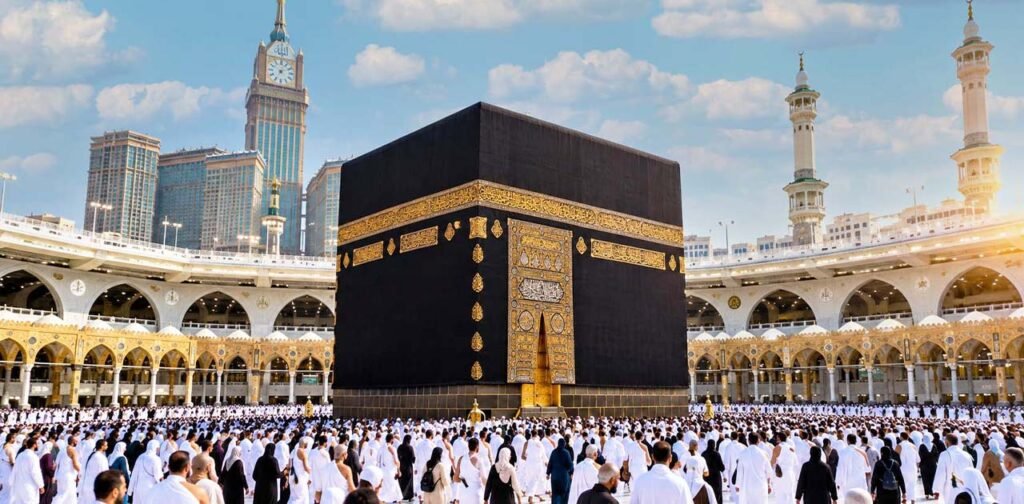
How to Perform Umrah: A Complete Step-by-Step Guide
Umrah is often described as a journey of the heart before it is a journey of the feet. Unlike Hajj, it carries no fixed season — a pilgrim can step into the sacred precincts of Makkah in any month of the year and begin a short but deeply moving act of worship. For first-time visitors, though, the rituals can feel unfamiliar. This guide walks you through exactly how to perform Umrah, step by step, so you can focus on sincerity and presence rather than worrying about what comes next.
What Is Umrah?
Before You Begin: Preparing for Umrah
A little preparation goes a long way toward a calm, focused Umrah. Before you travel:
- Renew your intention (niyyah) and remind yourself of the purpose of the journey.
- Learn the Talbiyah and a few short duas you’ll want to recite during Tawaf and Sa’i.
- Pack Ihram garments (for men) and comfortable, modest clothing (for women).
- Trim your nails and remove excess body hair before entering Ihram, since these actions are prohibited once Ihram begins.
- Confirm your Umrah visa, flights, and accommodation with a licensed operator well in advance.
Step 1: Enter the State of Ihram
1Ihram is both a physical state and a spiritual one. Before reaching the Miqat (the designated boundary points around Makkah), pilgrims perform ghusl (a full ritual bath), apply unscented care if needed, and put on the Ihram garments — two unstitched white sheets for men, and modest, ordinary clothing for women.
Once at or before the Miqat, you form your intention specifically for Umrah and begin reciting the Talbiyah:
From this moment, certain restrictions apply: no arguing or foul language, no hunting, no cutting hair or nails, and for men, no wearing stitched clothing or covering the head. These restrictions remain in place until Umrah is completed.
Step 2: Perform Tawaf Around the Kaaba
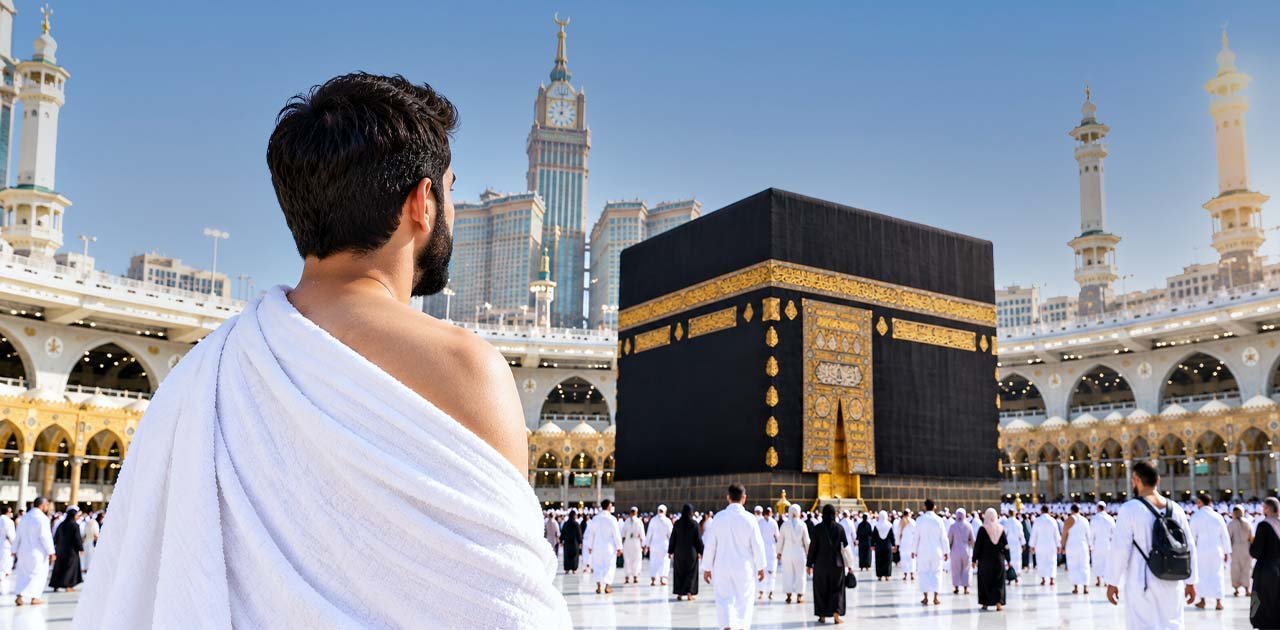
2Upon arriving at the Grand Mosque, pilgrims move toward the Kaaba to begin Tawaf — circling the Kaaba seven times in a counter-clockwise direction.
- Position yourself so the Black Stone (Hajar al-Aswad) is on your left, near the corner of the Kaaba.
- Raise your hand and say “Allahu Akbar” as you align with the Black Stone to begin.
- Walk counter-clockwise, reciting dhikr, Quran, or personal supplications as you go.
- Each time you complete a full circuit back to the Black Stone corner, that counts as one round — raise your hand and say “Allahu Akbar” again to mark it.
- Repeat until you have completed seven full rounds.
Men are encouraged to expose their right shoulder (Idtiba) during Tawaf and to walk at a slightly brisker pace for the first three rounds, a Sunnah practice that dates back to the early Muslims.
Step 3: Pray Two Rak’ahs and Drink Zamzam
3After finishing the seventh round, it is Sunnah to pray two short rak’ahs behind Maqam Ibrahim (the Station of Ibrahim), if space allows — otherwise, anywhere within the mosque is acceptable. Many pilgrims then drink Zamzam water, which is available throughout the mosque, before moving on to the next ritual.
Step 4: Perform Sa’i Between Safa and Marwa
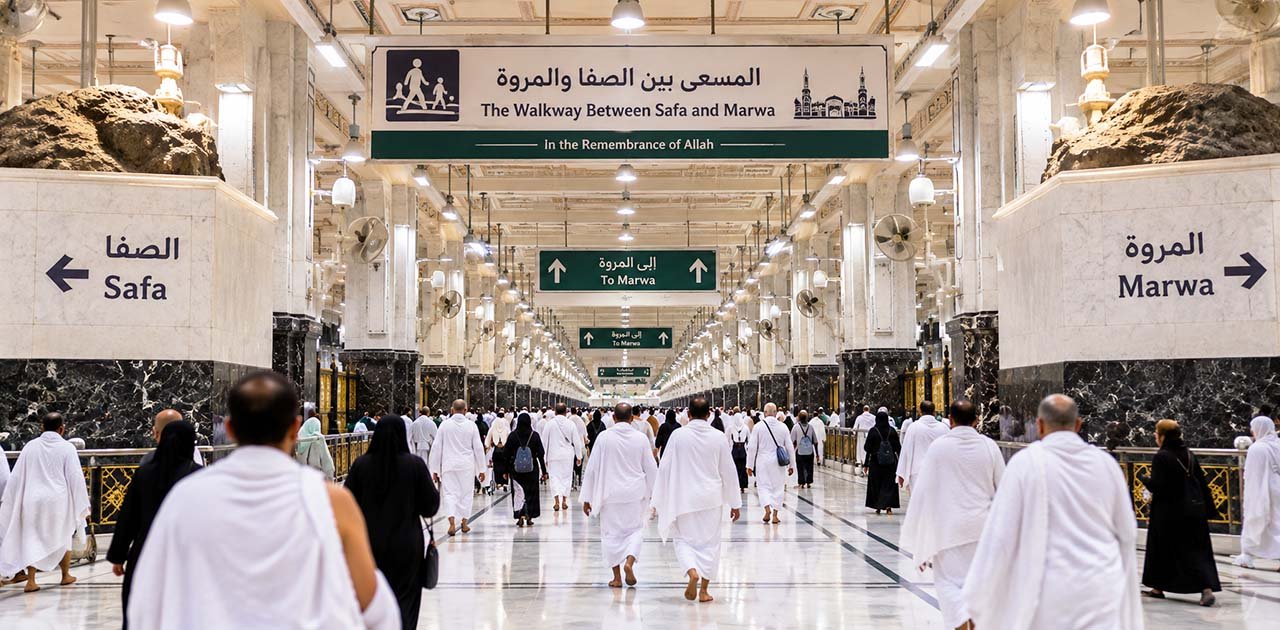
4Sa’i commemorates Hajar’s search for water for her son Ismail, walking between the hills of Safa and Marwa. Clear signage inside the mosque directs pilgrims to the starting point at Safa.
- Begin at Mount Safa, facing the Kaaba, and make your intention for Sa’i.
- Walk toward Mount Marwa — this counts as the first lap.
- Between the two green markers along the path, men are encouraged to jog or walk briskly; women walk at a normal pace throughout.
- Upon reaching Marwa, turn and walk back toward Safa — this is the second lap.
- Continue back and forth until you complete seven laps in total, finishing at Marwa.
Step 5: Halq or Taqsir — Completing Umrah
5The final step is cutting the hair, which formally ends the state of Ihram.
| For Men | For Women |
|---|---|
| Shave the entire head (Halq) or trim it evenly (Taqsir) — Halq carries greater reward. | Cut approximately 1–2 cm from the ends of the hair, gathered together. |
Once this is done, all the restrictions of Ihram are lifted, and your Umrah is complete. There is no obligation to do this immediately inside the mosque — it can be done afterward at your accommodation.
A Quick Reference Checklist
Tawaf: 7 rounds counter-clockwise starting at the Black Stone
After Tawaf: 2 rak’ahs near Maqam Ibrahim, drink Zamzam
Sa’i: 7 laps between Safa and Marwa
Finish: Halq (shave) or Taqsir (trim) to exit Ihram
Frequently Asked Questions
How long does it take to perform Umrah?
The core rituals — Tawaf, Sa’i, and Halq or Taqsir — usually take between two and four hours from start to finish, depending on how crowded the mosque is and your own pace.
Can Umrah be performed at any time of the year?
Yes. Unlike Hajj, which is tied to specific days of Dhul Hijjah, Umrah can be performed at any point in the year, with Ramadan being an especially popular and rewarding time to go.
Do women need a mahram to perform Umrah?
Rules vary depending on nationality and current Saudi regulations, and they do change from time to time. It’s best to confirm the latest requirements with a licensed Umrah operator before booking your trip.
What is the difference between Umrah and Hajj?
Hajj is obligatory once in a lifetime for those who are able, performed only during specific days of Dhul Hijjah, and includes additional rites such as standing at Arafat. Umrah is shorter, not obligatory, and can be performed any time of year.
Our team handles everything from visas and flights to hotels near the Haram — so you can focus on the worship, not the logistics.
Explore Our Umrah Packages →